

IOL Test Protocol
IOL Test Protocol
Model eye
What is Model Eye?
We compare ‘visible differences’ of multifocal & EDOF IOLs under identical conditions.
IOL models vary widely, but inconsistent comparison standards make selection difficult.
We provide results captured under unified standards to help understanding.
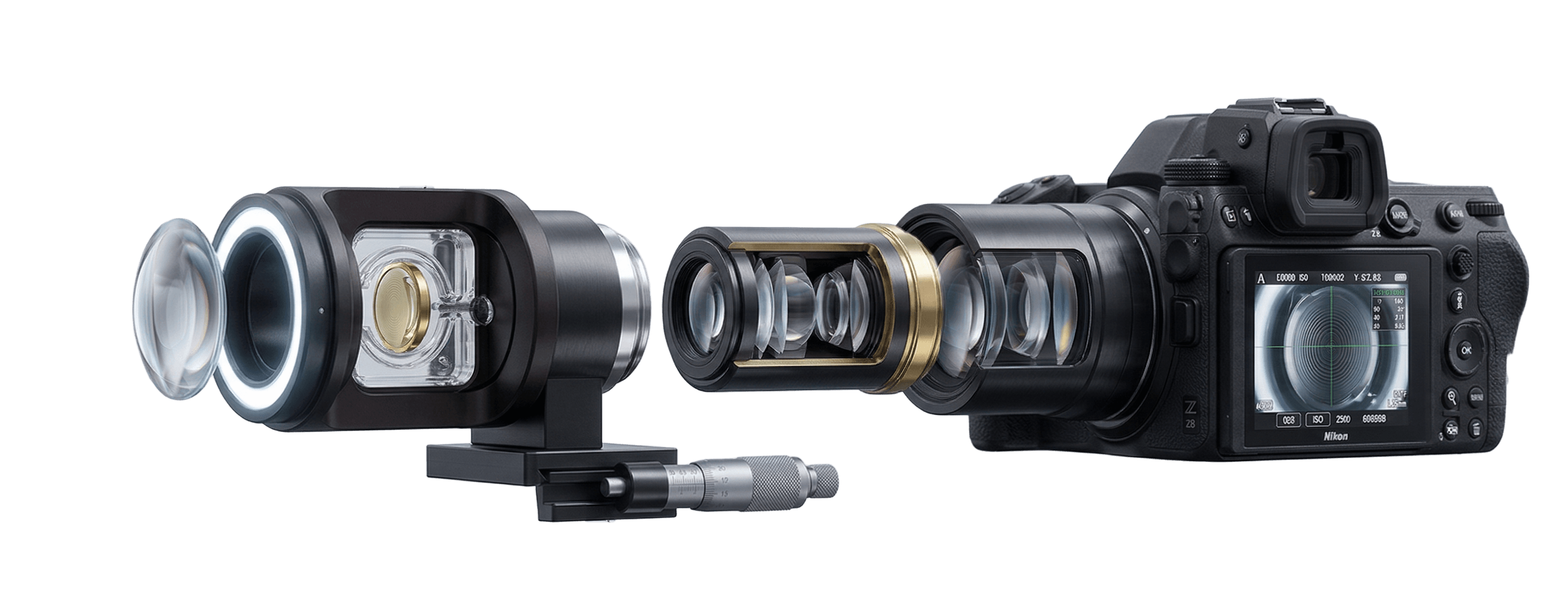 Mobile Model Eye
Mobile model eye Overview
Mobile Model Eye Overview
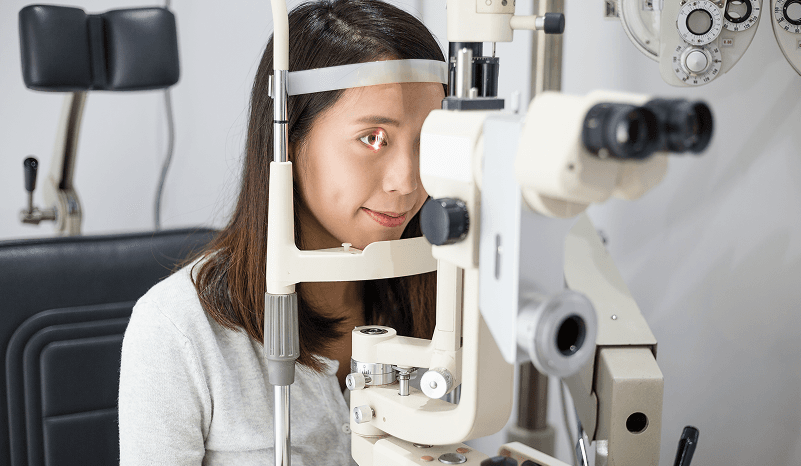


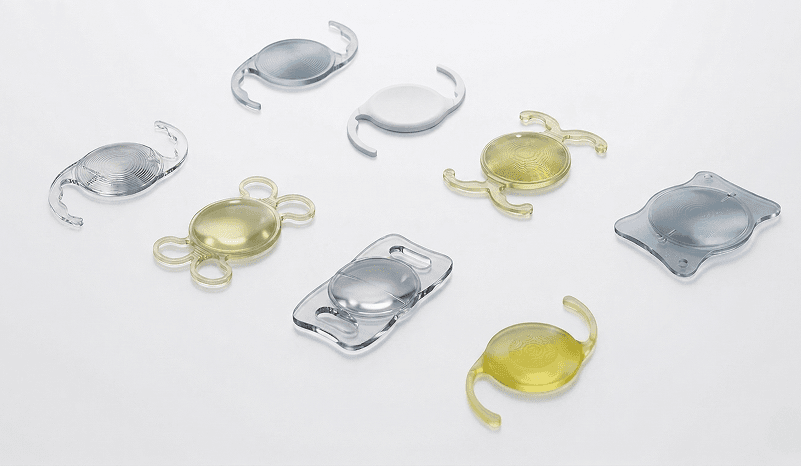
Background
Multifocal IOLs are used in cataract surgery to also correct presbyopia.
While new models launch yearly, objective comparison data
that ophthalmologists and patients can rely on is often insufficient.
Large-scale trials take time to accumulate, and small approval studies
may be company-led, requiring careful interpretation.
Limitations
USAF 1951 resolution targets and defocus curve data are produced quickly,
but some are captured under ideal conditions (e.g., monochromatic light, high-contrast targets) that differ from real patient experience.
This can make results hard to interpret intuitively for both patients and clinicians.
Approach
A mobile model eye, developed by Prof. Ho Sik Hwang (Catholic Univ. of Korea)
and validated in a SCIE-indexed paper, was used. Commercial IOLs were inserted
and captured under identical conditions.
- Real scenes : distant buildings (day/night), night street capture
- Quantification : USAF 1951 resolution target
- Distance : continuous capture from 6 m to 15 cm
This aims to objectively show distance sharpness, night glare/halos/dysphotopsia,
and intermediate/near vision.
Criteria
- Reference (control) : Tecnis monofocal IOL (ZCB00)
- Quantification : USAF 1951 resolution target
- Compared : Eyhance, Symfony, Synergy, Puresee, Vivity, Panoptix, Lisa tri, Gemetric, Intensity, Precizon presbyopic, Precizon Go, Odyssey, etc.
(diffractive/refractive multifocal, continuous focus, EDOF)
Model Eye Experimental Methods
Model Eye Methods
We built a portable mobile model eye, inserted various IOLs, and captured day/night distant scenes (buildings, night streets) and resolution targets.
Developed by Prof. Ho Sik Hwang (Catholic Univ. of Korea) and validated in a SCIE-indexed paper, it also serves educational purposes for explaining "actual visual experience" to patients.
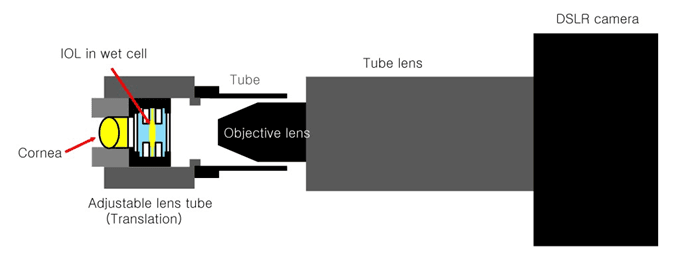
Overview of the imaging system: an IOL is inserted in the mobile model eye
and recorded by DSLR camera through the optical system (lens/tube).
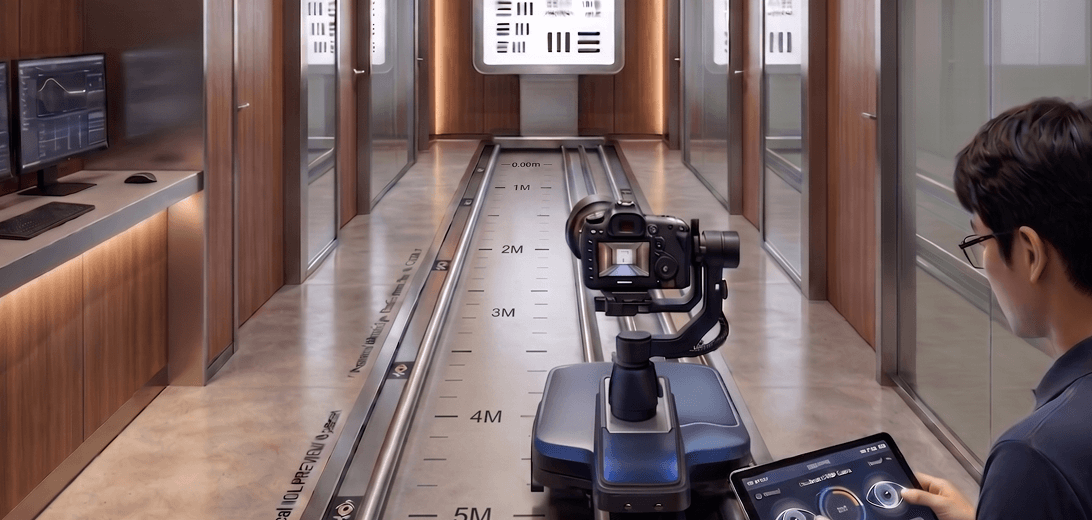
The USAF 1951 target was printed on 50×50 cm paper and lit by two LEDs at about 45°.
The model eye was moved continuously from 6 m to 25 cm and recorded as video.
A rail/dolly was used to prevent shaking, and floor markers kept the distance ranges consistent.
Even with the same optics, perceived experience may shift over time.
”Rather than 'seeing' the retinal image directly, the brain reconstructs information from the optic nerve and interprets sharpness, contrast, and blur.
and only shows 'optical differences'.
Comparisons should therefore include the monofocal (reference lens)
to view optical differences together under identical conditions.